
internal
In November 2019, ArtRebels and Daimler Trucks Asia convened in Tokyo for what was our second workshop and real-life interaction. Over two days of interactive exercises and world-building experiences, ArtRebels guided DTA further into the innovation model that would together help us realise a new era of mobility.
This is a brief recap of Day 1, in which we guided a one-day prototype experience of our Innovation Model.
Know Your World Game
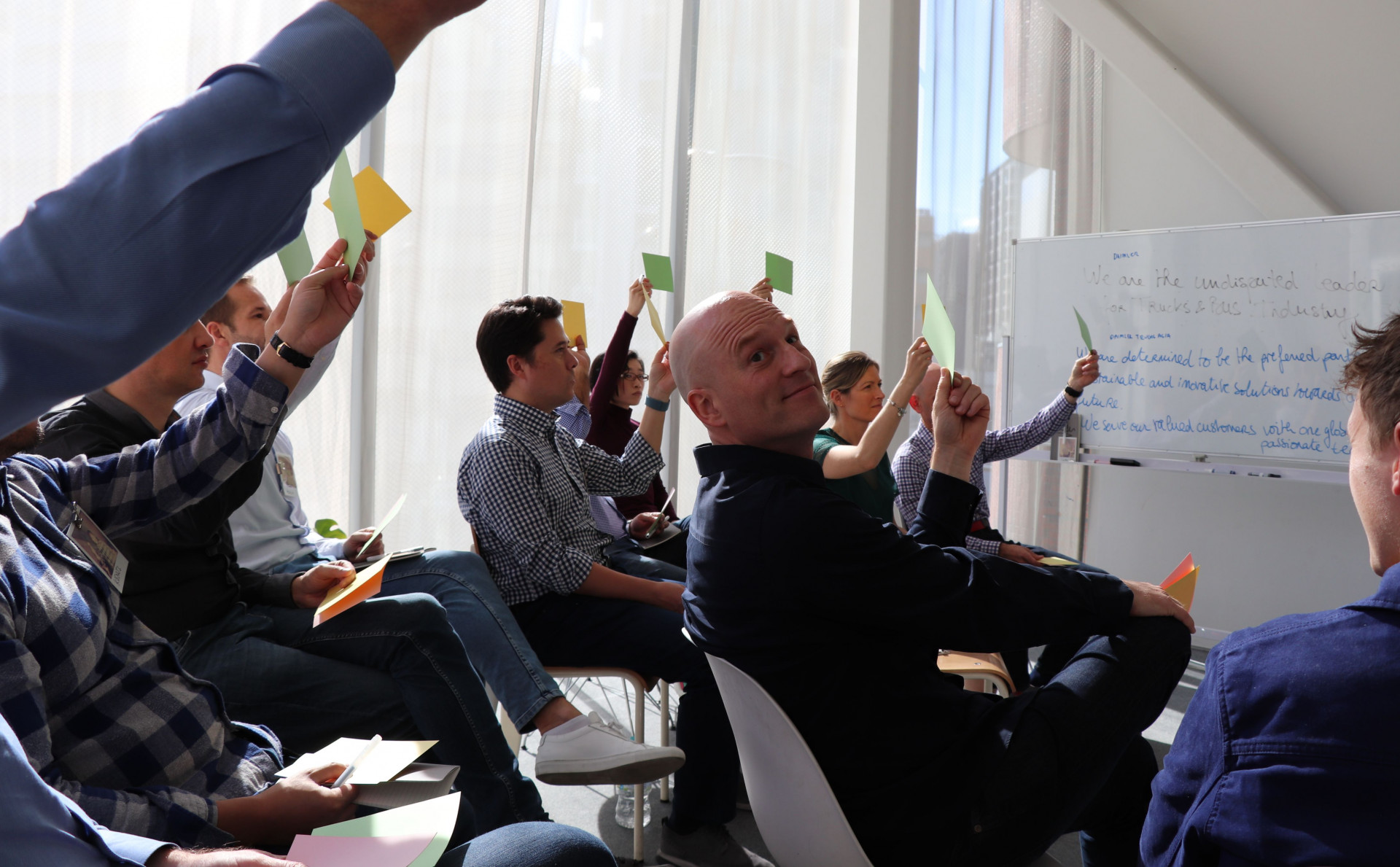
Any journey of innovation begins with how we look at the world — indeed, the ways we observe the world inform the ways in which we hope to change it. To begin our one-day simulation of the ArtRebels method, we decided to put those worldly observations into focus and playfully test our assumptions of the world in which we live.
Inspired by Hans Rosling’s illuminating book, Factfulness, the Know Your World Game asked us to vote on the global rates of things like education, healthcare and poverty eradication, in order to see where our collective intuition lay. As Hans and Ola Rosling found in their own experiments (see video below), humans tend to be no better at accurately guessing the societal trends than chimpanzees, which offers us a fresh reminder to always take note of the pre-conceived assumptions we take into any situation.
Carla C. Hjort: Introducing our Macrotrends and Innovation Model
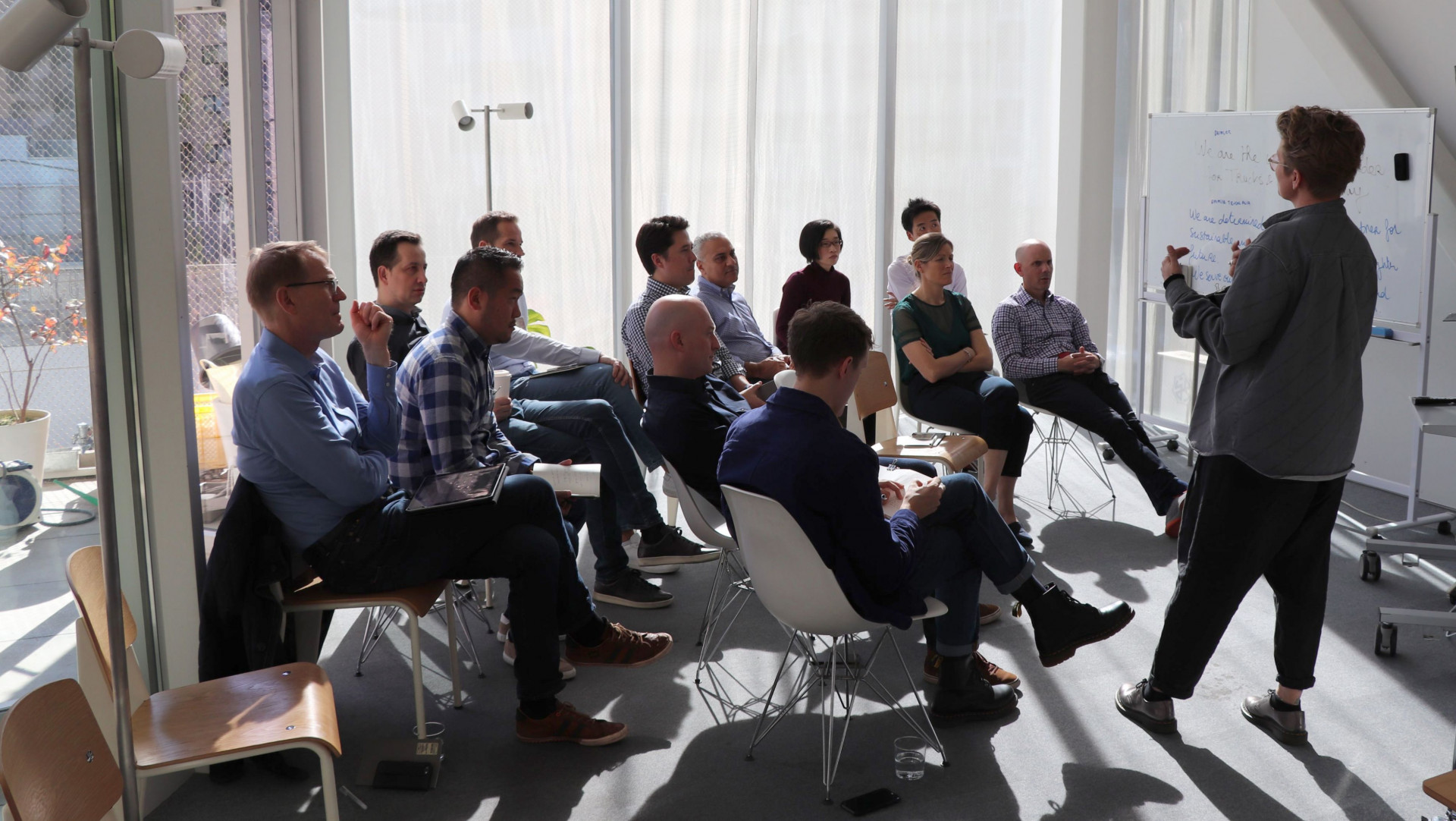
Next, Carla took the stage to unveil our Macrotrends and the first iteration of our Innovation Model.
Any attempt to influence the world for the better must begin with a deep understanding of how the world is already changing. To do this, we researched and defined five crucial Macrotrends that represent some of the most defining changes happening around the world today — and in the decades to come. You can browse the Macrotrends here.
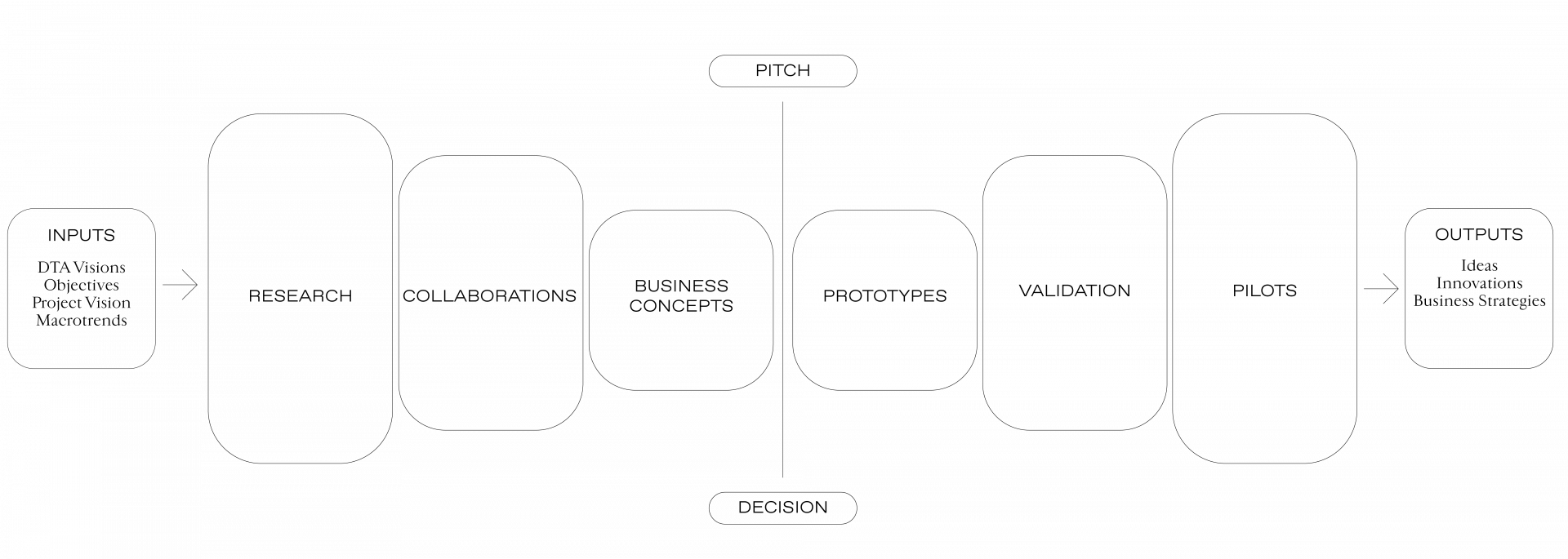
Carla then guided us through the very first version of our Innovation Model. Our Innovation Model is a signature ArtRebels methodology for turning inputs (our Macrotrends, Guiding Vision, Project Objectives and DTA Vision) into outputs (innovations, ideas and business strategies). She also described how the aim of this initial one-year collaboration is to prototype every tool and format within the first half of our Innovation Model, and begin conceptualising ideas that we can take into the next phase of our collaboration.
Microtrends: Mapping the World in Movement
Macrotrends are crucial in understanding how society is changing, but they can sometimes feel ambiguous and difficult to translate into real-world consequences. In order to gain more clarity around how the Macrotrends might actually impact people, the planet and our mobility systems, we ran an exercise of unfolding the high-level Macrotrends into specific and understandable Microtrends.
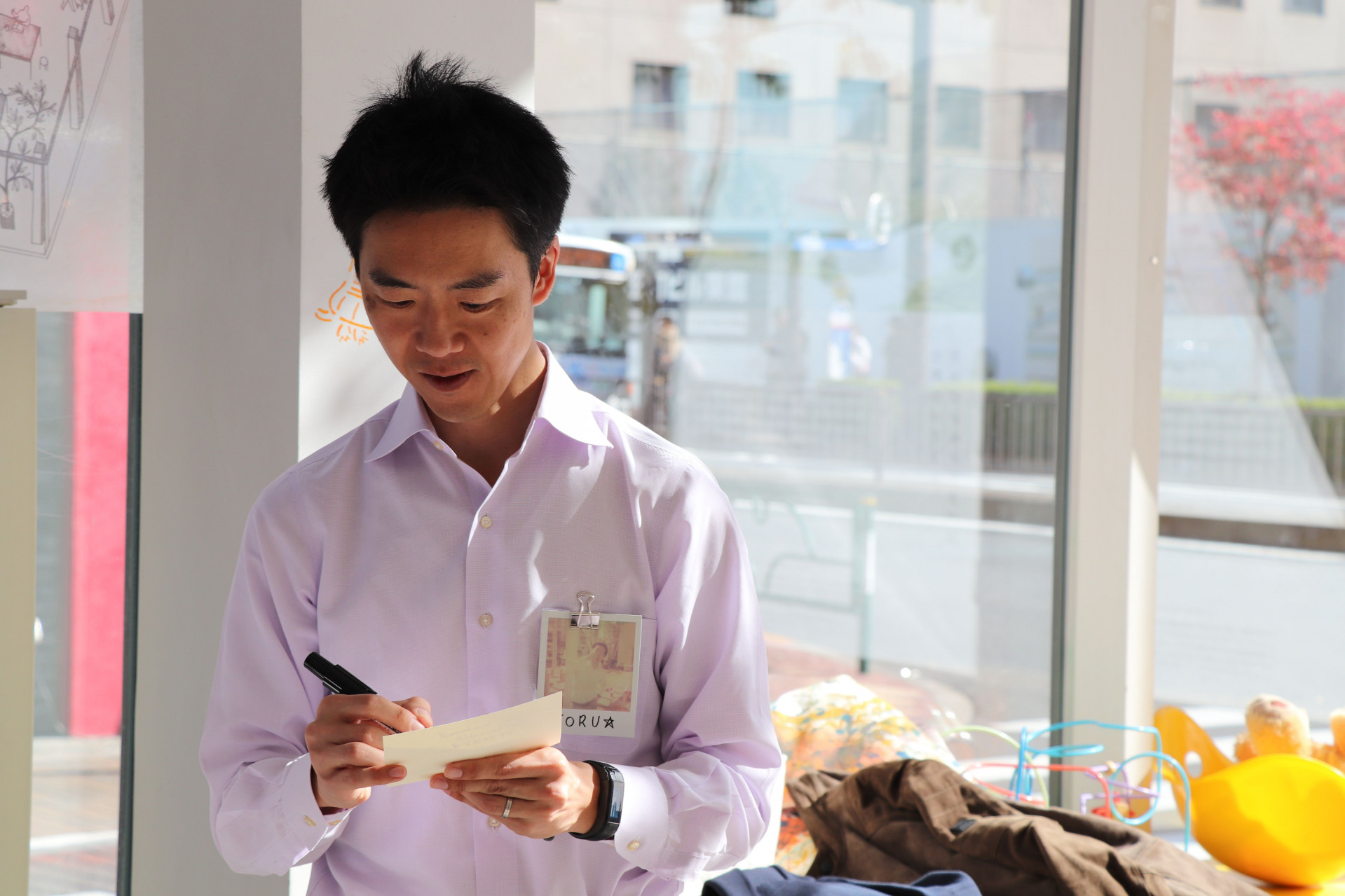
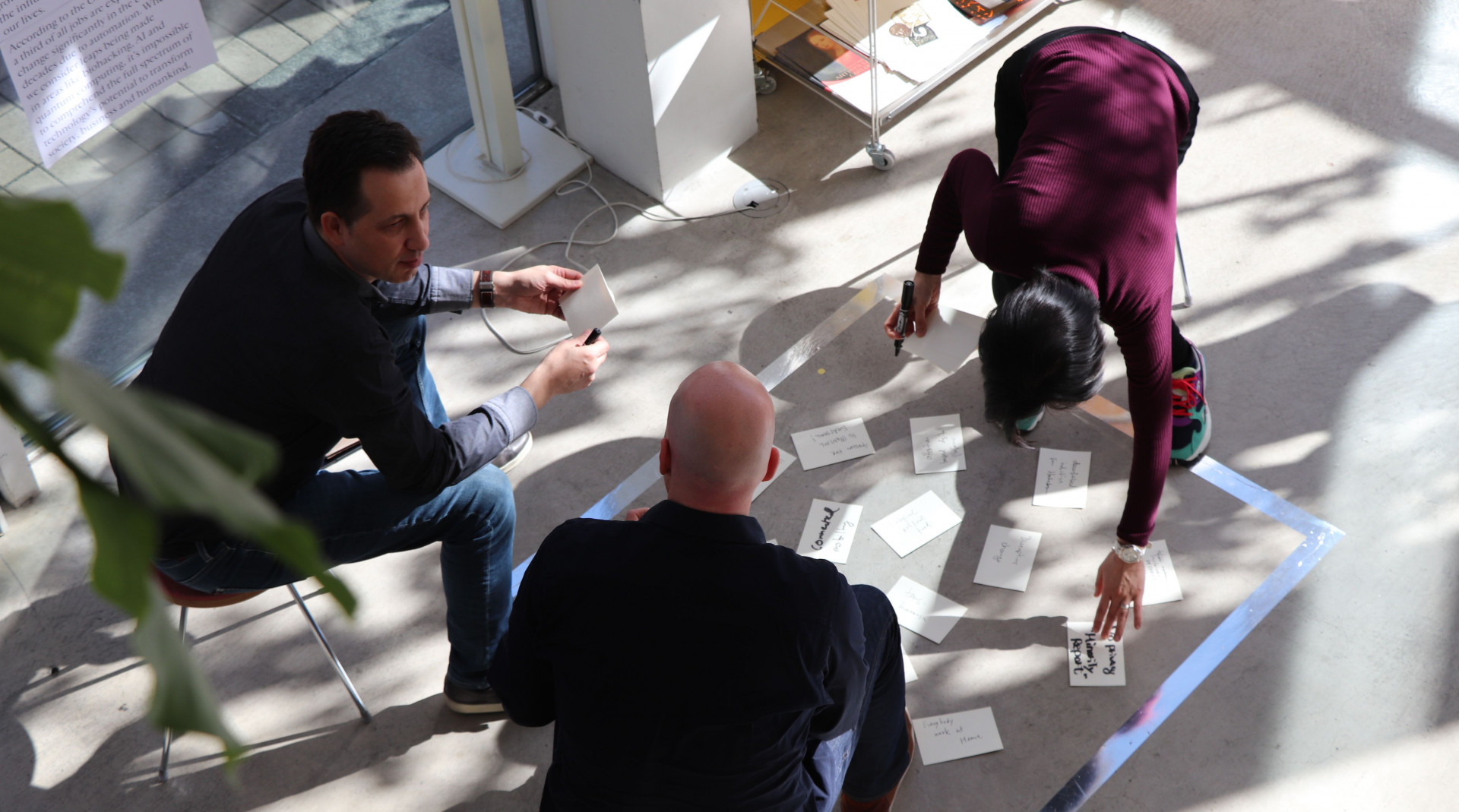
In groups we mapped out potential near- and long-term Microtrends — ranging from city-states, next-generation materials and bioengineering to new political revolutions and the end of capitalism. None of these were to try and say what the future would definitely hold; rather, it was an exercise in unlocking our imaginations and projecting current trends into potential future realities.
Finally, after revolving throughout all five Macrotrends, we then grouped all of the Microtrends into patterns and held a discussion around each.
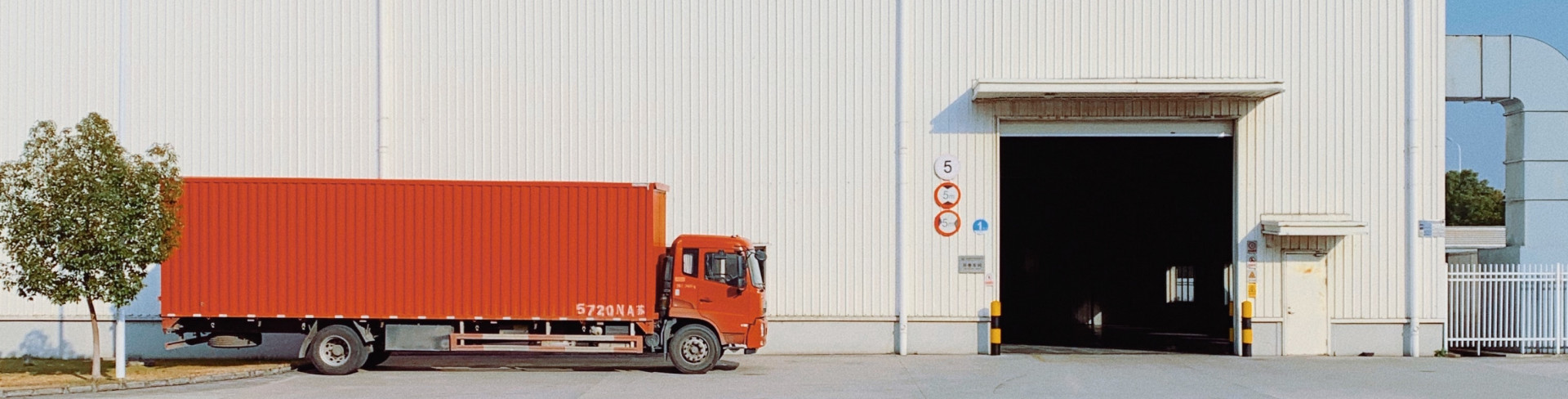
1st Step of Our Innovation Model: Research
Next, with the inputs of our model fresh in mind, Doug launched us into the very first phase of any valuable innovation process: research. Specifically, he presented our initial research into the global trucking industry using a signature ArtRebels research format: Research I/O.
Research I/O is our method of structuring and presenting in-depth research in ways that are accessible, engaging and, ultimately, useable. Trucking I/O outlines some of the most urgent issues and potential opportunities that we want to address within the global trucking industry. We condensed the most important points from our Trucking I/O into a long-read article, The Veins of Civilisation, which you can read here.
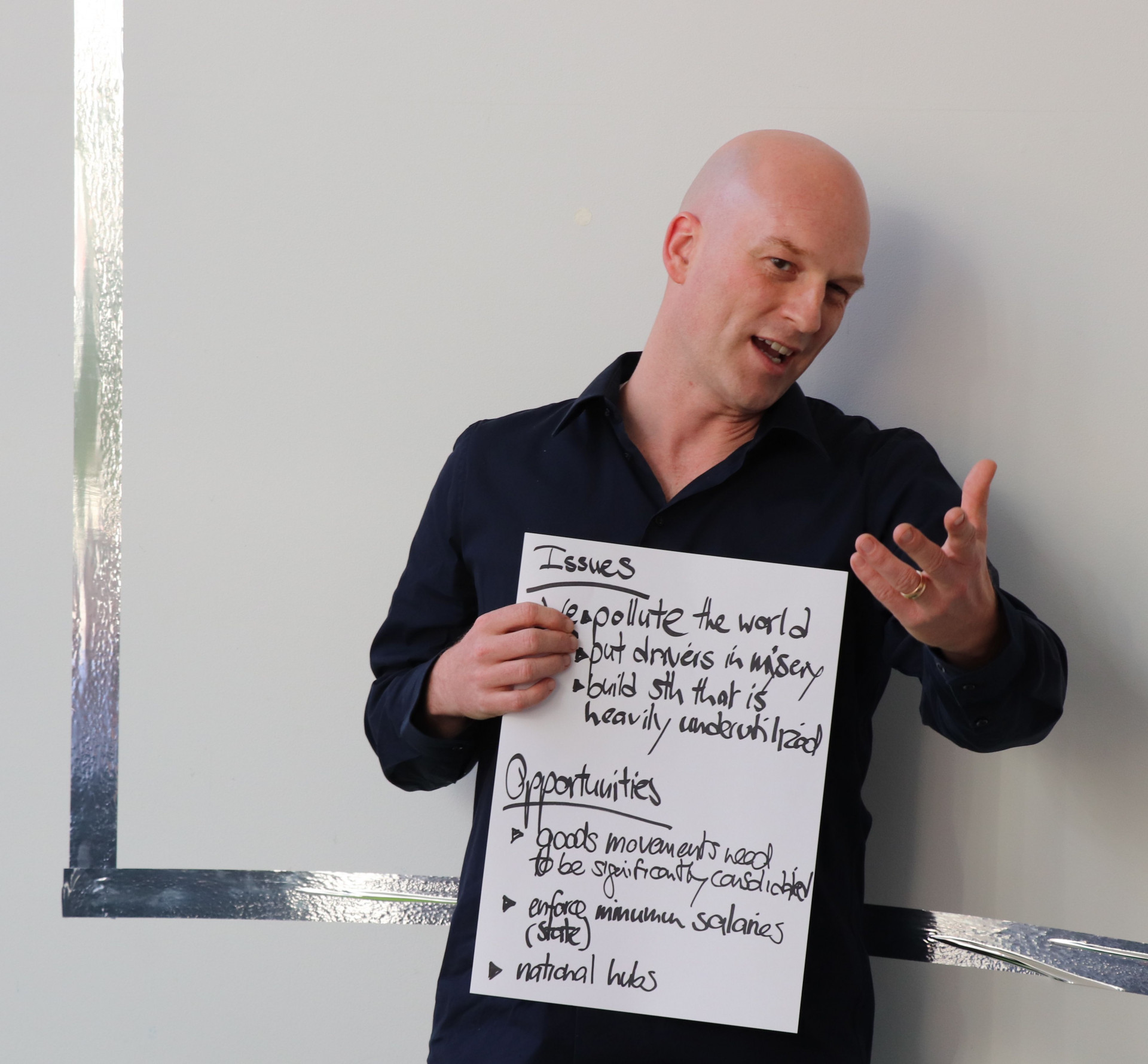
After Doug’s presentation, we split up once again into groups for a reflection session, followed by a group discussion and presentation of responses to the Trucking I/O, highlighting challenges, missing issues and opportunities, and potential solutions.
After some challenges around missing areas — like the safety of trucks — a general consensus emerged that neatly categorised all issues and opportunities into three themes:
- The environmental degradation caused by trucks
- A lack of logistical effeciency in the trucking and freight industry
- The marginalised and reduced humanity of truck drivers
After we returned from Tokyo, these jointly-defined areas were incredibly valuable in helping us shape the next step of our innovation process within trucks, which was to launch Explorations and Collaborations and beginning to explore concepts.
2nd Step of Our Innovation Model: Collaborators
Continuing our journey into the innovation methodology, we next looked outwards and took a glimpse into the world of some of the people who are already working on solving the issues presented in Trucking I/O.
Collaboration is absolutely essential to our method of working. We know that in order to develop the best solutions, we need to work with the best talents — and it’s simply impossible to try to cultivate all of that talent in-house. Rather, we often take more of a facilitating role: defining briefs and challenges, curating collaborators, guiding their work and, finally, translating their outcomes into concepts and strategies that we can then plug into the DTA matrix.
Here we presented one of those potential collaborators, who have since become actual collaborators (see interview with Arthur Röing Baer and collaborator profile on Trust). That project which we presented and discussed in November was UNION SHIFT, a strategic roadmap to achieve economically distributed automation and leverage the collective bargaining power of Russian truck drivers.
Undercurrent of Our Innovation Model: Systemic Change
Ultimately, everything we’re trying to achieve together is related in some way to systemic change — which is to say that we’re not trying to be caretakers of the status quo, no matter how profitable or technologically-intoxicating. Rather, we’re interested in becoming pioneers of creating better ways of doing things, and by doing so, updating the operating systems that society runs on to become more resilient, caring and empowering — both for communities and the planet that they depend on.
To introduce the team to systemic change, we held a group viewing of a TED talk by an Oxford Saïd Business School professor called Reclaiming Social Entrepreneurship. In the talk, she uses social entrepreneurship as a lens through which to explore ideas around system change leadership, explaining that “we don’t need more social businesses, we need more social change.”
Ultimately, what she explains in the video is that if we want to create real change, we need to need to look beyond the symptoms of social problems and go straight to their root causes. If we want to design and shape a better future of mobility, we need to be system change leaders and focus on fixing the broken systems that mobility runs on.
These ideas formed the natural climax of our first day and our guided journey throughout the initial steps of the innovation model. We left the workshop venue and headed towards dinner with a final thought and reflection:
If Daimler Trucks Asia is to undergo this transformation into a more mission- and value-driven business, we need to become both thought-leaders and system change leaders for a better future of mobility.