
Magazine
Science fiction is a global language; across time, regions and cultures we have been drawn to producing these types of stories as we speculate about the future in a way that can incorporate our hopes, dreams and fears about various aspects of society. Although it might seem like a realm of fantastical guessing games, it is always based in reality. Maybe that’s what makes it so attractive to us. We talked to Professor Lisa Yaszek of the Georgia Institute of Technology about the genre’s power and functions through time.
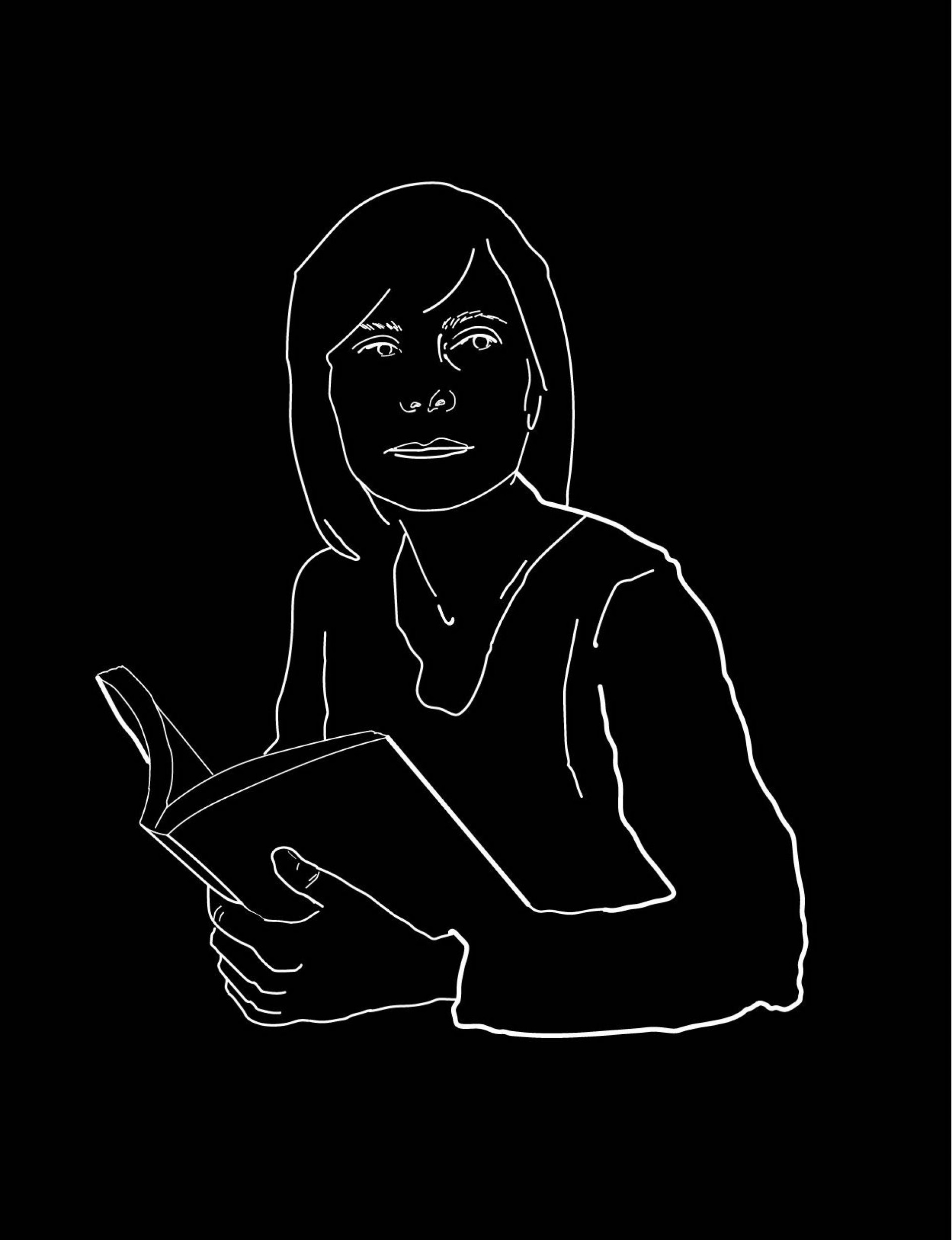
To me, science fiction is a virtual laboratory in which we can test certain ideas out, about how we might act in the present and what the effects might be in the future. And it’s a free way to do that — speaking both monetarily and artistically. While we can’t necessarily experiment on large populations for instance, we can imagine how we might move societies differently. And even though we can’t always afford to do certain kinds of scientific or technological research, science fiction can allow us to imagine where it might go in the future.
It has changed. For example, the stories coming out in the 17th and 18th centuries were initially written and used mostly by scientists themselves to demonstrate certain scientific ideas that might not be particularly legible otherwise. And then in the late 19th century and early 20th, the idea was to get people excited about the techno-scientific future and to get them thinking about how the 20th century was going to be a radical break from history and how people should get prepared for that and be educated for it. In fact, the Luxembourgish-American inventor, writer, editor, and magazine publisher Hugo Gernsbeck, better known as the “Father of Science Fiction,” used his stories to inspire scientists and engineers to create new things to entertain the general lay audience so that young men and women would grow up to be scientists and engineers.
Then, after World War II a lot of science fiction takes a little bit of a darker turn and it becomes if not a warning, certainly much more meditative and asked us to think really carefully about the kinds of powers humanity suddenly had access to. For example, I think of Japan and the first Godzilla movie, which is very different than all the other Godzilla movies because it’s really questioning like think how people need to think before you start throwing gigantic,dangerous technologies around.
A lot of times people assume science fiction is predictive, but it’s not. Sometimes it can guess and get things right — like with William Gibson and the Internet or HG Wells and atomic energy — but they weren’t right because they magically guessed the future. They got it right because, as good science fiction authors do, they were extrapolating from their present; they were looking around at what was going on with science in their time to make a guess about the future.
I think of science fiction as more of a fun-house mirror to reality because it’s extrapolating from the real that even as we push it forward and break the science and make it fantastic and create wonderful adventures, there’s always some hook back to our own world right at some point. Of course, for a story to work, you have to break the connection to our world, right? I always talk about this with my students, especially with the science. You have to break the science to make a science fiction story — otherwise you’re just putting together a lab report.
I think that relationship and that play gives scientists themselves the freedom to start thinking about their own work from new perspectives. And I also think that it’s very rare that a science fiction author makes up an invention wholesale that a scientist is like, “wow, I’m going to create this and it’s going to be paradigm shattering,” but more that they’re all sort of working with the spirit of the times. Perhaps the main advantage for scientists is that these authors are able to crystallise something that they want to convey to a larger audience as effectively as possible.
Sure. In the 1600s, Johann Kepler, who was a mathematician, was exploring the then-radical idea that the Moon revolves around the Earth. So he wrote a 60-page mathematical proof of this — and back then formulas were not as standardised as the way they are now and people had to hand-write out the math, which as you can imagine made it a lot longer and caused a lot of translation problems if people are trying to read it in other countries. Long story short he was really worried that no one would understand his proof, so he wrote a 200-page science fiction story to go with the math.
I don’t think you can speculate too much in terms of generating too many different possibilities. Instead, what I think is really dangerous is speculating too much about just one future; about investing in one vision of the future and assuming that one is the inevitable and correct and proper future. I find that dangerous first and foremost from ascientific or technological standpoint. If you are interested in thinking about science fiction as a laboratory for thinking through the future of science and technology, you might miss specific economic or technological opportunities. The same also goes for social or cultural futures. People all over the world want to tell different stories about the future. More people are coming forward, saying “I have a stake in the future too, and maybe it doesn’t look like this.” Maybe it looks like Star Trek or maybe it looks like something you’ve never seen before right and I think that’s really exciting: to see futures in full color.
I believe in science fiction as the perfect kind of entertainment because it both entertains and instructs — it speaks to us at both the level of the gut and of the mind. The best science fiction invites you to use your mind as well, so it’s a full sensory engagement. You’re having fun and enjoying it and I personally think that doubles your pleasure.
Still, I understand some people, you know want to check their brain at the door and that’s fair, too. But I think the advantage of science fiction is that, once you pick your brain back up, you’re refreshed and you come back to the world refreshed. There’s no doubt that it’s an escape, but it is an escape from realitythat returns us to the world with fresh perspectives and new ways of seeing and doing things.