
journal
A conversation about storytelling, innovation and the future of mobility with Bas Van De Poel, Creative Director at SPACE10.
In a world where complicated global forces are leading to ever more intractable and systemic challenges, corporations find themselves remarkably positioned to address larger social problems — head-on and at scale. SPACE10 is an IKEA-backed research and design lab helping the furniture giant broaden its horizons and help to solve more urgent societal issues like renewable energy, affordable housing, urban agriculture and next-generation mobility.
We sat down with SPACE10’s Creative Director, Bas Van De Poel, to learn about the signature SPACE10 methodology of making information more appealing, engaging and, ultimately, empowering to the many people.
Sure, SPACE10 is a research and design lab, and we’re proudly supported by IKEA. Instead of looking into incremental changes or business opportunities for IKEA, we focus on the global changes we’re facing ahead of us and really try to design long-lasting sustainable solutions for these.
At SPACE10, creative direction sits somewhere in between business strategy, art direction and design, and I’m responsible for the overall creative direction of SPACE10, including collaborations with external partners.
That’s the challenge with a lot of research that’s happening today — you end up with these beautiful 200-page reports that nobody is going to read.
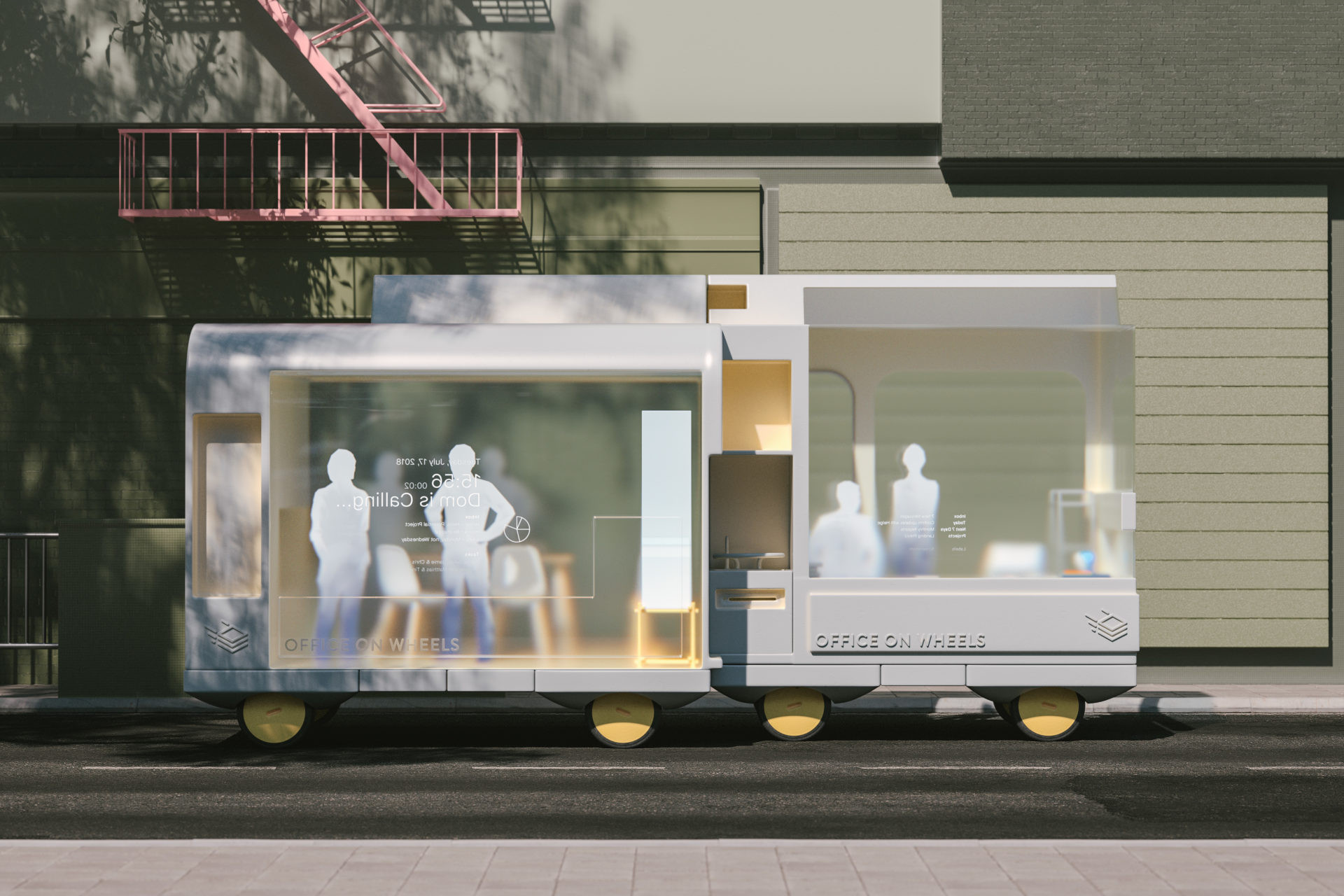
It started out with a personal fascination. Like many projects at SPACE10, different people were interested in the promise of autonomous vehicles, and there was also at the same time a lot of buzz in the industry around this topic and the potential influence it will have on our everyday life and on the urban landscape in general.
So basically we started researching it, and through that research started to develop a vision of our own — what the influence of autonomous vehicles might be and the ripple effects it might have. Right now there’s a lot of speculation and excitement about the technology, but it’s very much clear to us that at some point driverless vehicles will just be a given.
And when autonomous vehicles reach a certain level of complexity, you will basically end up with self-driving platforms similar to Apple’s app store where developers can simply build on top of that platform. So in terms of self-driving cars, you would basically just have a self-driving platform where you can build anything on top.
That was the starting point of Spaces on Wheels — if you could have that platform, what would people build? So then we looked into what people spend most of their time on in the urban context, and tailored services and experiences to these activities.

Our general approach is this method that we call Playful Research, which is a way of presenting research that is very insightful but also playful and engaging. That’s the challenge with a lot of research that’s happening today; you end up with these beautiful 200-page reports that nobody is going to read.
We also released a report around autonomous vehicles, but then how do you translate that report into a visual concept that people can engage with very easily and communicates our vision in a direct, playful and explicit way?
And then there are, of course, a lot of aesthetic decisions that we made in that process. We found in our research that if you google ‘car of the future’ you get this very sterile, chrome-painted, male-dominated fantasy of the future car that is very similar to the batmobile. And basically, we try to make it more human-approachable, perhaps even a bit organic and erotic.
So that’s something we’re always thinking about when we explore new technologies — how may they made accessible and useable for many people, and is that even possible?


At the end of that day, Playful Research is a method of making very extensive research more approach for the many people by using engaging storytelling and an appealing visual language.
The impact is about empowering people to make informed decisions and have an opinion about these societal topics we’re exploring, and finally, to present alternative futures that might be better for humans and the planet.
I think that it’s not so much when these technologies will come about — they’re already here. The question is much more about where.

For sure, very much so. In general Playful Research explores a lot of things that deal with ethics, and also in a lot of cases tries to democratise the design process by inviting the public as we did with interactive, playful surveys like One Shared House and Do You Speak Human? Also, cultural context plays very much into these topics we’re exploring.
It starts with the core team of SPACE10, which is a very multicultural team — we’re 30 people coming from 20 different countries, and there’s a 50/50 male-female balance. But that’s just the starting point. When we seek our collaborations we also very much look into the team of the collaborator, how are these teams assembled and the location of them.
But in terms of autonomous vehicles, and indeed many of the topics we explore, the context question is a particularly important one. I think that it’s not so much when these technologies will come about — they’re already here — but the question is much more about where.
You can imagine that implementing roads that are suitable for autonomous vehicles, or designing entire cities around them, is much easier when the city is built from scratch like we're seeing in China, for instance, or in controlled environments like the airport.
So that’s something we’re always thinking about when we explore new technologies — how may they be accessible and useable for many people, and is that even possible?